Broken Egg: A Designer’s Review for Real Projects
As someone who has spent countless hours hooped up at the machine, watching needles dance across fabric, I have learned to be skeptical of cute concepts that do not translate well into thread. We have all seen those digital previews that look charming on a screen but turn into a tangled mess of puckering and broken threads once they hit the hoop. That is why I approached the Broken Egg embroidery design with a critical eye. This is not just about whether an image is adorable; it is about whether it holds up under the mechanical stress of stitching and the aesthetic scrutiny of a paying customer.
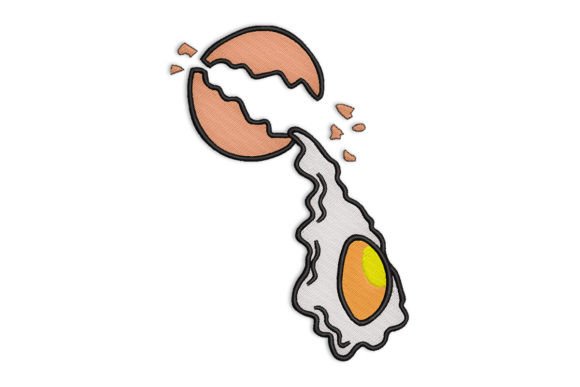
The first impression of this breakfast-themed motif is one of playful simplicity. It captures a specific moment—the crack of a shell, the spill of the yolk—with a graphic clarity that suggests it was built with stitch efficiency in mind. For embroidery designers and small business owners, this visual personality is crucial. It does not try to be photorealistic, which is often a trap for amateur digitizers. Instead, it leans into a stylized representation that works beautifully with the inherent texture of thread. The mood is lighthearted and domestic, making it an immediate fit for kitchen textiles and casual apparel.
Putting Broken Egg to the Test in Real Scenarios
To truly evaluate a design, you have to imagine it in a finished product. I recently considered using this motif for a custom order involving a set of linen tea towels and a canvas tote bag. The client wanted something that felt handmade but polished, avoiding the cluttered look that often plagues hobbyist creations. Broken Egg fit this brief perfectly. On the linen, the open spaces in the design allowed the natural weave of the fabric to breathe, preventing the heavy, cardboard-like feel that dense fill stitches can create.
When I visualized this design on a sweatshirt, the results were equally promising. Sweatshirt embroidery requires careful consideration of pile and thickness. A design with too much fine detail gets lost in the fleece, while overly large motifs can weigh down the garment. This breakfast embroidery strikes a balance. The shapes are bold enough to remain clear against the textured background of a cotton blend hoodie, yet compact enough to sit comfortably on the chest or sleeve without distorting the fabric. For an Etsy seller looking to expand their catalog beyond standard monograms, this type of thematic icon adds variety and seasonal appeal without requiring complex color changes.
Versatility Across Product Lines
The true value of a versatile machine embroidery design lies in its adaptability. I see this particular file working exceptionally well across several categories. For baby embroidery, the soft, rounded lines of the egg shape are gentle and appealing, suitable for onesies or burp cloths, provided the scale is adjusted appropriately. For adult custom apparel, it serves as a quirky accent on aprons or chef coats, adding a touch of personality to professional wear.
If you are running a craft business, consider how this design pairs with other elements. It could be the centerpiece of a holiday embroidery collection for Easter, or part of a broader "morning routine" series for everyday home goods. The key is consistency. Using the same design style across different products helps build brand recognition. When a customer sees that distinctive cracked shell on a pillow cover, then again on a tote bag design, it reinforces your shop’s aesthetic identity.
Technical Considerations and Stitch Behavior
While the visual appeal is strong, we must discuss the technical execution. Any experienced designer knows that the devil is in the details. When working with a motif like this, pay close attention to the transition between the shell and the yolk. If the digitizing relies heavily on satin stitch for the outlines, ensure the width is not so wide that it catches on loose threads during washing. Conversely, if it uses fill stitch for the yolk, check the stitch density. Too dense, and you risk perforating thin fabrics like silk or lightweight cotton; too sparse, and the backing will show through.
I recommend testing this embroidery file on scrap fabric before committing to a final product. Specifically, test it on the actual material you intend to use. A design that looks crisp on stable quilting cotton may behave differently on stretchy jersey or textured terry cloth. Use the appropriate stabilizer for each fabric type. For knits, a cut-away stabilizer is often necessary to prevent distortion, while woven fabrics might only need a tear-away. Always check the hoop size requirements listed in the file details. If the design is near the edge of your hoop’s capacity, leave extra margin for hooping errors.
Navigating Fabric and Color Challenges
Color choice plays a pivotal role in how this design is perceived. The classic yellow and white palette is iconic, but do not be afraid to experiment. For a more subtle look on dark fabric, consider using pastel threads or even a single-color monotone approach to create a shadow effect. However, be cautious with low-contrast combinations. If the thread colors blend too much with the fabric texture, the definition of the crack and the spill will be lost. Always view your test stitch-out in natural light and from a distance to ensure the image reads clearly.
There are situations where you should use this design carefully. Avoid placing it on areas of high friction or extreme stretch, such as the knee of children’s pants or the shoulder seam of a tight-fitting cap. Curved surfaces like hats require precise positioning to ensure the design does not appear warped. Additionally, if the design includes any tiny lettering or intricate corner details, inspect them closely after stitching. Small elements are the first to suffer from poor tension or inadequate stabilizer support.
Commercial Viability and Professional Presentation
For those selling finished products or digital embroidery files, presentation is everything. A clean, well-stitched Broken Egg enhances the perceived value of your handmade product. It signals professionalism and attention to detail. When creating printable mockups or digital product previews, ensure the lighting highlights the texture of the thread. Customers want to see the quality of the stitch, not just the shape of the design.
Before listing this as a commercial embroidery asset or using it in items for sale, confirm the licensing terms. Most designers offer different licenses for personal versus commercial use. Ensure you have the right to sell finished items made with this file. This step is critical for maintaining trust with your buyers and respecting the intellectual property of the digitizer. Once cleared, this design can become a staple in your library, offering a reliable, charming option for a wide range of creative projects.
In conclusion, this breakfast-themed motif is a solid addition to any designer’s toolkit. It balances whimsy with technical practicality, making it suitable for everything from kitchen towels to boutique apparel. By respecting the limitations of your materials and paying attention to stitch density and stabilizer choice, you can produce high-quality results that delight customers and stand the test of time. It is a reminder that even simple subjects, when executed with care, can elevate the everyday into something special.