Farm Animal Stack: A Designer’s Review
As an embroidery designer who has spent years digitizing and testing designs for personalized gift shops, I approach every new machine embroidery design with a critical eye. It is not enough for a pattern to look cute on a screen; it must withstand the rigors of real-world production, washing, and gifting. Recently, I had the opportunity to test the Farm Animal Stack, and I want to share my practical insights on how this piece performs in a professional setting.
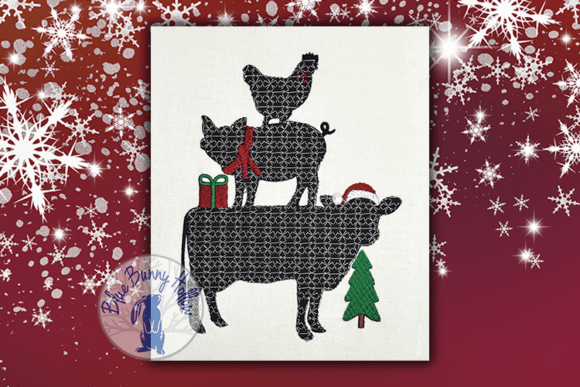
The first impression of the Farm Animal Stack is undeniably charming. Embracing farmyard festivities, this applique design features a whimsical vertical arrangement of beloved barnyard creatures. We see a cow donning a festive Santa hat, a pig wrapped in a cozy red scarf, and a chicken adding its own unique flair to the pile. The mood is playful yet sweet, striking a balance that feels both handmade and polished. For those of us creating Christmas collections, this design offers a fresh alternative to traditional snowflakes and reindeer, bringing a touch of rustic warmth to holiday decor.
Why This Design Works for Personalized Gifts
In the world of custom embroidery, emotional connection drives sales. Customers are not just buying thread on fabric; they are buying a feeling. The Farm Animal Stack excels here because it taps into nostalgia and innocence. When I visualize this design on a finished product, I immediately think of baby showers and nursery decorations. The soft curves of the animals and the friendly expressions make it ideal for baby embroidery projects. Imagine this stitched onto a muslin swaddle blanket or a hooded towel. The applique technique reduces bulk, which is crucial for items that will be in constant contact with sensitive skin.
Beyond the nursery, this design has surprising versatility for family keepsakes. An embroidered towel featuring this stack becomes an instant heirloom for a kitchen that loves farmhouse aesthetics. For Etsy sellers and small shop owners, the appeal lies in its broad demographic reach. It is gender-neutral enough for any child, yet sophisticated enough in its execution to appeal to adults who appreciate folk art styles. As a personalized gift, it allows for easy customization. You might add a monogram below the stack or include the recipient's name in a complementary font, transforming a standard item into a bespoke treasure.
Strategic Product Placement and Usage
When planning your inventory, consider where the Farm Animal Stack will have the most impact. I recommend prioritizing flat, stable surfaces for the best results. Pillow covers are a fantastic option. The design serves as a focal point, drawing the eye immediately. Similarly, tote bags made from canvas or heavy cotton provide a sturdy background that supports the weight of the applique fabrics without distorting the stitch work.
For wedding gift designers, do not overlook the potential here. While it may seem juvenile at first glance, a high-quality execution on a linen tea towel or a decorative throw pillow can serve as a charming housewarming present for couples starting their lives together, especially if they have a love for rural living or pets. The key is in the presentation. A handmade product gains perceived value when paired with premium materials. Use high-thread-count fabrics and ensure your backing is invisible to maintain that elegant, boutique feel.
Navigating Technical Challenges
However, no design is without its pitfalls. As a professional, you must know where to exercise caution. The Farm Animal Stack relies on clear outlines and distinct color blocks. This means it requires careful handling on textured fabrics. If you are stitching on a thick, looped terry cloth towel, the small details of the chicken or the pig’s scarf might get lost in the pile. In such cases, I advise using a cut-away stabilizer to provide maximum support and ensuring your needle is sharp enough to penetrate without causing puckering.
Another consideration is fabric stretch. If you plan to use this on baby clothes, avoid highly stretchy knits unless you are experienced with stabilizing them. The applique edges need a firm foundation to lie flat. Curved surfaces, such as the toe of a sock or the crown of a fitted hat, can distort the vertical stacking of the animals, making them appear leaned or warped. Always hoop your fabric tightly and consider using a floating method for difficult-to-hoop items.
Color contrast is also vital. The design features specific elements like the red scarf and Santa hat. If you stitch this on dark fabric, ensure your thread colors pop. Conversely, on light fabrics, check that the outline stitches are visible but not overpowering. I always recommend creating a printable mockup or stitching a test sample on both light and dark scraps before committing to a full production run. This helps you verify that the thread colors harmonize with your base material.
Enhancing Perceived Value and Trust
From a business perspective, the quality of your embroidery directly influences customer trust. A clean, well-executed Farm Animal Stack signals professionalism. Buyers engage more with products that look durable and thoughtfully made. When photographing your finished product, highlight the texture of the applique fabrics against the embroidery stitches. Show close-ups of the clean edges and the secure stitching. These details reassure buyers that the item will withstand frequent washing, a common concern for baby and kitchen items.
Furthermore, offering this as part of a cohesive collection can boost average order value. Pair the embroidered pillow with a matching apron or blanket. This creates a narrative around your brand, positioning you not just as a seller of single items, but as a curator of lifestyle goods. For digital product sellers, if you are licensing this design, ensure you understand the terms. Always confirm commercial embroidery rights before selling physical goods made with someone else’s digital embroidery file.
Practical Steps for Production
Before you launch this design in your shop, follow these essential steps:
- Test on scrap fabric: Never skip this step. Check for registration issues where the applique meets the satin stitch border.
- Check hoop size: Verify that the design fits comfortably within your machine’s hoop, leaving enough margin for stable hooping.
- Review stitch density: Ensure the density is appropriate for your chosen fabric to prevent stiffness or tearing.
- Use proper stabilizer: Match the stabilizer to the fabric weight. Heavier fabrics may need less support, while lightweight linens require robust backing.
- Confirm licensing: If you did not digitize this yourself, read the license agreement carefully to ensure you are compliant for commercial sales.
In conclusion, the Farm Animal Stack is a versatile and emotionally resonant addition to any embroidery portfolio. It bridges the gap between seasonal charm and everyday utility. By paying attention to fabric choice, stabilization, and presentation, you can transform this simple design into a high-value custom embroidery piece that delights customers and strengthens your brand reputation. Whether for a wedding gift, a baby shower present, or a festive home accessory, this design proves that thoughtful craftsmanship always finds its audience.