Fishing Boat Embroidery Review for Small Business Merch
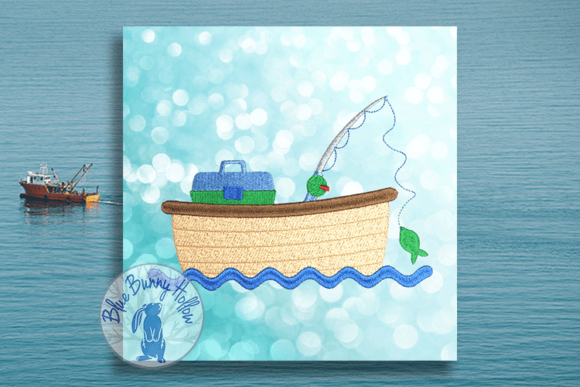
As an embroidery designer who has spent years digitizing files and consulting with small business owners, I approach every new machine embroidery design with a critical eye. It is not enough for a motif to be cute; it must be functional, durable, and commercially viable. Recently, I evaluated the Fishing Boat design, a charming piece featuring a boat equipped with a tackle box, fishing rod, and a lively fish on the line. While the product description notes it is perfect for kids who love the thrill of the catch, my review focuses on its potential for professional application in branded merchandise and small business assets.
First Impressions: Visual Personality and Appeal
The immediate impression of the Fishing Boat design is one of playful nostalgia. It does not strive for hyper-realism but rather captures the essence of a leisurely day on the water. The inclusion of specific elements like the tackle box and the bent rod adds narrative depth, transforming a simple icon into a story. For brands operating in the outdoor, lifestyle, or family-oriented sectors, this visual personality strikes a balance between friendly and active. It feels handmade and approachable, which is crucial for businesses aiming to build a community-focused brand identity. However, from a technical standpoint, the charm lies in the details, and those details require careful handling during production.
Commercial Viability for Small Business Merch
For Etsy sellers, boutique owners, and creative studios, versatility is key. The Fishing Boat offers several avenues for integration into small business merch. Here is how I envision this design performing in real-world scenarios:
- Embroidered Patches: This is perhaps the strongest use case. A well-digitized version of this design can serve as a standalone iron-on or sew-on patch. Patches allow customers to customize their own gear, increasing engagement and perceived value.
- Custom Apparel: Imagine this on the chest pocket of a work shirt for a marine supply store or on the sleeve of a casual tee for a summer camp. It acts as a subtle brand accent rather than an overwhelming logo.
- Tote Bag Design: Canvas totes are a staple for bakeries, florists, and bookshops. Placing the Fishing Boat centrally on a natural cotton tote creates a rustic, eco-friendly aesthetic that appeals to conscious consumers.
- Apron Embroidery: For seafood restaurants or coastal cafes, embroidering this motif on staff aprons adds a thematic touch that reinforces the dining experience without being overly corporate.
When used as a digital embroidery file for commercial projects, the design’s ability to convey a specific lifestyle makes it a valuable asset for product designers looking to expand their catalog beyond generic text-based logos.
Technical Considerations and Production Challenges
While the artistic merit is clear, the technical execution of Fishing Boat requires vigilance. The description mentions a tackle box and a lively fish, which implies intricate details. In commercial embroidery, complexity can lead to production headaches if not managed correctly.
Stitch Density and Fabric Texture
One must consider the stitch density relative to the fabric texture. If the design is too dense, it may cause puckering on lightweight materials like thin cotton t-shirts or silk blends. Conversely, on heavy denim or canvas, the stitches need to be robust enough to stand out. I recommend testing the design on various fabric weights before committing to a large run. The interplay between the thread and the material determines the quality of the finished product.
Size Constraints and Legibility
Small details like the fishing rod and the fish on the line risk getting lost if the design is scaled down too aggressively. For cap embroidery, where the curved surface and limited space pose challenges, this design might need simplification. Similarly, for tiny lapel pins or small labels, the tackle box detail could become a blob of thread. Always verify the minimum recommended size provided by the digitizer. If such data is missing from the embroidery file documentation, proceed with caution and create test samples.
Color Contrast and Thread Selection
The vibrancy of the Fishing Boat relies heavily on thread colors. A blue boat against a navy uniform will vanish. For dark uniforms, consider using lighter threads or adding a satin stitch border to define the shape. For a more premium look, limit the color palette to three or four tones to maintain visual consistency across different products. This restraint often elevates the design from "crafty" to "professional."
Enhancing Brand Identity and Customer Trust
Consistency builds trust. When a customer sees the same high-quality Fishing Boat emblem on a tote bag, a hat, and a sticker sheet, it reinforces brand recognition. This visual consistency signals professionalism and attention to detail. For handmade brands, using a well-executed embroidery design distinguishes your products from mass-produced imports. It tells the buyer that care was taken in every step of the creation process.
Moreover, incorporating such designs into printable mockup presentations can significantly boost online sales. Showing potential clients how the design looks on a realistic garment helps them visualize the end result, reducing hesitation and increasing conversion rates for custom orders.
Practical Designer Notes for Implementation
Before launching this design into your product line, follow these practical steps to ensure success:
- Test in Black and White: Convert the design to grayscale in your software to check for contrast issues. If the details disappear without color, they may be too fine for reliable stitching.
- Check Hoop Size Compatibility: Confirm that the design fits within standard hoop size limitations (e.g., 4x4 or 5x7 inches) without requiring excessive re-hooping, which can shift alignment.
- Use Proper Stabilizer: Match the stabilizer to the fabric. Cut-away stabilizer is often best for garments that will undergo frequent washing, ensuring the embroidered patch or direct stitch remains intact.
- Create Client Mockups: Use digital tools to place the design on various items. Compare it beside other design assets to ensure it complements your existing brand aesthetic.
- Verify Licensing: Always confirm the commercial licensing terms of the digital embroidery file. Ensure you have the right to sell physical items made with this design, especially if you are producing goods for third-party clients.
In conclusion, the Fishing Boat is a versatile and engaging design that holds significant promise for small business merchandise. Its charm lies in its storytelling elements, but its success depends on rigorous technical testing and thoughtful application. By respecting the constraints of stitch density, fabric choice, and scale, you can transform this playful motif into a powerful tool for brand expression. Whether adorning a child’s backpack or a boutique’s tote bag, this design invites connection and joy, provided it is executed with the precision that professional embroidery demands.