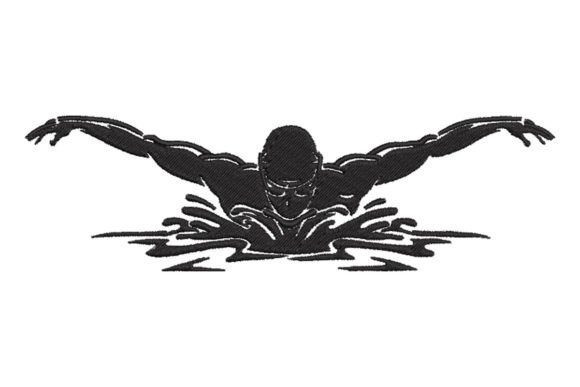
Reviewing the Swimming Man Embroidery Design
As a designer who has spent countless hours digitizing patterns and troubleshooting machine errors, I approach every new machine embroidery design with a mix of curiosity and caution. We have all been there: downloading a file that looks stunning in the preview thumbnail, only to find it turns into a tangled mess of thread on the actual garment. Today, I am taking a close look at the Swimming Man embroidery design to see if it holds up under the scrutiny of real-world production.
The first impression of this piece is one of effortless motion. The silhouette captures the essence of summer sports without relying on excessive detail that often plagues digital files. For those of us running a small shop or managing an Etsy store, simplicity is often synonymous with reliability. This design does not try to be everything to everyone; instead, it offers a clean, recognizable shape that translates well across various mediums. It feels less like a complex technical challenge and more like a versatile asset ready for immediate use.
Real-World Application and Versatility
To truly evaluate a design, you must imagine it on a finished product. I recently considered using the Swimming Man motif for a custom order involving a set of canvas tote bags for a local swim club. The client wanted something modern, gender-neutral, and durable. This design fit the brief perfectly. Because it relies on a strong silhouette rather than intricate shading, it maintains its integrity even when scaled down for smaller items like baby clothes or scaled up for a bold sweatshirt statement.
When working on custom apparel, such as t-shirts or hoodies, the layout of this design allows for flexible placement. It works beautifully centered on the chest of a polo shirt or offset on the sleeve of a raglan tee. For those creating personalized gifts, this motif pairs exceptionally well with monograms. Imagine the swimmer positioned above a family name on a beach towel or apron. The visual balance is natural, requiring minimal adjustment in your embroidery software.
Beyond apparel, this design shines in home decor projects. I can easily visualize it stitched onto pillowcases for a nautical-themed nursery or as part of a set of kitchen towels for a summer house gift. The clean lines ensure that the design remains legible and attractive, whether it is viewed from across the room or up close. For craft business owners, this versatility means you can create multiple product listings from a single digital embroidery file, maximizing your return on investment.
Technical Performance and Stitch Quality
From a technical standpoint, the success of any embroidery project depends on how the stitches interact with the fabric. While I do not have the exact stitch count or file format details for this specific listing, the visual structure suggests a balanced approach to stitch density. Designs that are too dense can cause puckering, especially on lighter fabrics, while those that are too sparse may lack definition.
When testing this type of silhouette, I recommend paying close attention to the edges. A well-digitized design will use a combination of satin stitch for borders and fill stitch for larger areas, ensuring smooth transitions. If the design uses primarily running stitch or simple fills, it will sew out faster, which is a significant advantage for high-volume commercial embroidery jobs. However, always check the preview in your software to confirm there are no unnecessary jumps or trims that could slow down your machine.
Fabric texture plays a crucial role here. On smooth cotton or polyester blends, the Swimming Man design should appear crisp and professional. However, when working with textured fabrics like terry cloth towels or fuzzy fleece, you may need to adjust your stabilizer choice. A cut-away stabilizer is often safer for stretchy materials like sweatshirts to prevent distortion during washing. Always test the design on a scrap piece of your intended fabric before committing to the final product.
Navigating Challenges and Limitations
No design is perfect for every situation, and honest review requires acknowledging where caution is needed. The Swimming Man design, being a silhouette, relies heavily on contrast. If you plan to embroider this on dark fabric using dark thread, the details may get lost. In such cases, consider using a lighter thread color or adding a subtle backing patch to make the shape pop. This is particularly important for embroidered patches where visibility is key.
Curved surfaces present another challenge. If you are applying this design to caps or hats, ensure the hoop size is appropriate and that the design is not too large for the front panel. Small details can become distorted on tight curves, so keep the scale moderate. Additionally, avoid placing the design too close to seams or zippers, as this can cause needle breaks or uneven stitching.
For those selling handmade products, remember that customers often wash their items frequently. Ensure that the stitch density is sufficient to withstand repeated laundering without fraying. If the design includes very thin lines, they may be prone to breaking over time. A quick test wash on a sample piece can save you from future customer complaints and protect your brand reputation.
Enhancing Brand Value and Customer Appeal
In the competitive world of online selling, visual appeal drives sales. The Swimming Man design offers a professional look that enhances the perceived value of your products. It conveys a sense of activity, health, and leisure, which resonates well with buyers looking for meaningful gifts. Whether it is for holiday embroidery projects or everyday wear, the design’s timeless nature ensures it does not feel dated quickly.
For digital product sellers, providing high-quality printable mockups featuring this design can significantly boost engagement. Show potential buyers how the design looks on a tote bag, a baby onesie, and a adult t-shirt. This helps them visualize the end result and increases their confidence in purchasing your digital embroidery file. Consistency in your brand presentation, using reliable designs like this one, builds trust with your audience.
Final Designer Notes
Before you start stitching, take a moment to review the licensing terms provided with the download. Confirm whether the design is approved for commercial use if you plan to sell finished items. Check the included file formats to ensure compatibility with your specific embroidery machine. Most modern machines accept common formats, but it is always better to verify.
Start with a test run on scrap fabric. Check thread color contrast against your chosen material. Inspect the small details for clarity. If possible, view the design in black and white in your software to assess its structural integrity without the distraction of color. These small steps ensure that your final product meets the high standards your customers expect.
The Swimming Man embroidery design is a solid addition to any designer’s library. It balances aesthetic appeal with practical usability, making it suitable for a wide range of projects from custom apparel to home decor. By understanding its strengths and limitations, you can leverage this design to create high-quality, profitable products that stand out in the marketplace.